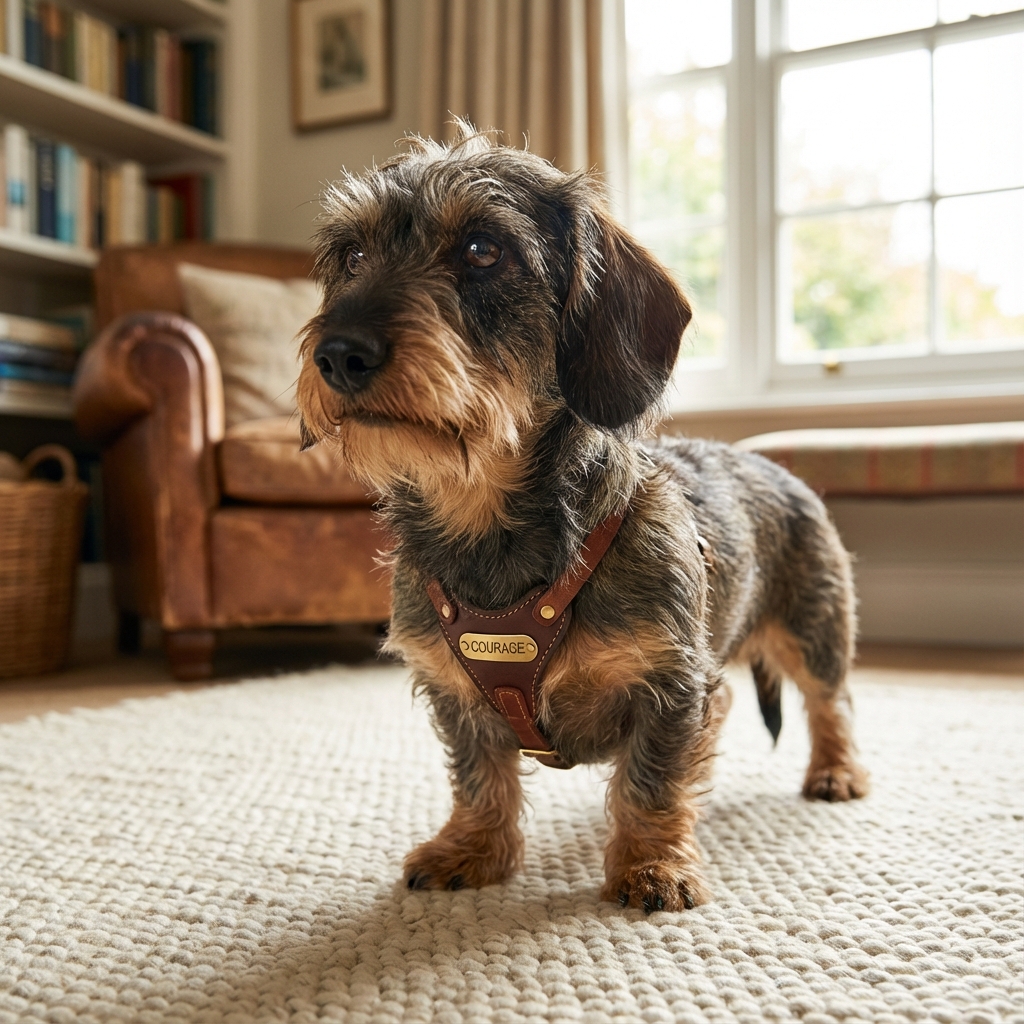
Dachshund
The Dachshund is a German scent hound bred over 300 years ago to hunt badgers underground, recognized in Standard and Miniature sizes with three coat varieties: Smooth, Longhaired, and Wirehaired.
The Dachshund is an instantly recognizable breed. Whether called a “Wiener Dog,” a “Sausage Dog,” or a “Doxie,” the long body, short legs, and drop ears are immediately distinctive. This shape, often considered comical, was engineered for a serious purpose: the Dachshund was bred to pursue badgers underground.
The breed is known for combining a stubborn, independent nature with devotion and affection toward its family. It possesses a notably deep bark for its size and a courageous disposition that belies its small stature.
History and Origin: The Badger Dog
The name “Dachshund” is German for “Badger Dog” (Dachs = badger, Hund = dog). Developed in Germany over 300 years ago, the breed was created to hunt the badger, a vicious and dangerous subterranean predator.
- Form Follows Function: Every part of the Dachshund is engineered for this job.
- Long Body: To fit inside narrow underground tunnels.
- Short Legs: To keep him low to the ground and allow him to dig efficiently.
- Deep Chest: To providing ample lung capacity for stamina while underground in low-oxygen environments.
- Loud Bark: To allow the human hunter to locate the dog beneath the earth.
- Courage: It takes immense bravery for a 20-pound dog to face a 25-pound badger in a dark hole.
Miniatures and Varieties
Originally, Dachshunds were larger (30-40 lbs). Over time, hunters bred smaller versions to hunt rabbits and foxes. The Miniature Dachshund was developed to pursue smaller prey into smaller holes. The three coat varieties also had specific purposes:
- Smooth: The original badger hunter.
- Longhaired: Likely crossed with spaniels to hunt in colder conditions.
- Wirehaired: Likely crossed with terriers to provide protection against briars and thorns in thick underbrush.
Physical Characteristics: The Sausage Shape
The Dachshund is low to the ground, long in body, and short of leg, with robust muscular development.
Sizes
- Standard: 16 to 32 pounds (7–14 kg).
- Miniature: 11 pounds (5 kg) and under at 12 months of age.
- “Tweenie”: An unofficial term for Dachshunds that fall between the two sizes (11-16 lbs).
Coat Varieties and Colors
- Smooth (Short-haired): The coat is short, shiny, and smooth.
- Longhaired: The coat is sleek and wavy, with “feathers” on the legs, ears, and tail.
- Wirehaired: The coat is rough, thick, and hard, with a distinctive beard and eyebrows.
Colors: Red (ranging from cream to rusty red) is the most common, followed by Black and Tan. Other patterns include Chocolate, Dapple (merle), Brindle, and Piebald.
Temperament and Personality
Dachshunds are famous for their personality. They are not dogs that disappear into the background.
The Napoleon Complex
They have no idea they are small. A Dachshund will defend his territory against a Great Dane or a delivery truck. They are excellent watchdogs with a bark that sounds like it belongs to a much larger dog.
The Stubborn Streak
Because they were bred to work independently underground (where they couldn’t see or hear their handler), they are independent thinkers. If you tell a Dachshund to “Sit,” he might think about it, check his schedule, and then maybe do it if there’s a treat involved.
The Coat Influence
Many breeders believe temperament varies by coat type:
- Smooths: Often the most “one-person” dogs, attached to a single owner.
- Longhairs: Tend to be the sweetest and calmest (spaniel influence).
- Wirehairs: Often the most energetic, clownish, and “terrier-like” (terrier influence).
The Cuddler
They are burrowers by nature. This translates to domestic life as a dog that must sleep under the covers. They are fiercely loyal and affectionate with their family, often following you from room to room.
Training and Exercise Needs
Exercise: Moderate but Necessary
A Dachshund is not a lazy dog. He needs exercise to keep his back strong and his weight down.
- Daily Needs: Two 20-minute walks a day are ideal. They love to sniff (it’s their job), so “sniff walks” are mentally tiring for them.
- No Jumping: This is the golden rule. You must not let them jump on or off furniture. The impact can rupture a disc in their back. Use ramps or stairs for the sofa and bed.
Training: The Challenge
- Housebreaking: Dachshunds are notoriously difficult to housebreak. They hate wet grass and cold weather. If it is raining, they will look at you like you are insane for suggesting they go outside. Patience, a covered area, and a strict routine are essential.
- Recall: Generally poor. If they catch a scent, their ears turn off. Keep them on a leash.
Health and Lifespan: The Back Issue
Dachshunds are generally a long-lived breed, often reaching 12 to 16 years. However, their unique shape comes with a major health risk.
- Intervertebral Disc Disease (IVDD): This is the most serious issue. Because of their long spine, Dachshunds are prone to ruptured discs, which can cause severe pain or paralysis. About 25% of Dachshunds will have back problems in their lifetime. Keeping them lean and preventing them from jumping is the best prevention.
- Obesity: Extra weight puts significant strain on the back. Weight management is essential, as excess body weight substantially increases spinal injury risk.
- Dental Disease: Crowded teeth in their long jaws require daily brushing.
- Epilepsy: Can occur in the breed.
- PRA (Progressive Retinal Atrophy): A genetic eye condition causing blindness, especially in Miniatures.
Grooming and Care
- Smooth: The easiest. Wipe them down with a damp cloth or a hound glove.
- Longhaired: Needs brushing 2-3 times a week to prevent mats, especially behind the ears and under the legs.
- Wirehaired: Needs to be “stripped” (hand-plucked) a few times a year to maintain the correct wiry texture. If you clip them, the coat becomes soft.
- Nails: Keep them short to help the foot stay compact.
- Ears: The drop ears trap moisture and need weekly cleaning.
Is a Dachshund Right for You?
The Dachshund is a delightful, demanding, and devoted companion.
Yes, if:
- You want a dog with personality plus. He will make you laugh every day.
- You live in an apartment. He is a great size for city living.
- You are patient. You can handle stubbornness and potty training challenges.
- You want a cuddle buddy. He will keep your feet warm in bed.
No, if:
- You have a home with many stairs. It is hard on their backs.
- You want an obedient soldier. He is a free thinker.
- You want a silent dog. He likes to bark at squirrels, leaves, and air.
- You are not prepared for potential veterinary costs. Back surgery can be expensive.
The Dachshund is a courageous, devoted companion with a stubborn streak and a deeply affectionate nature—a breed with considerable personality in a compact, low-slung frame.
Related Breeds

Alaskan Klee Kai
The Alaskan Klee Kai is a small, energetic spitz breed developed in Alaska in the 1970s, resembling ...

American Eskimo Dog
The American Eskimo Dog is a Nordic spitz breed descended from German Spitz dogs, known for its whit...

American Hairless Terrier
Smart, spirited, and hypoallergenic, the American Hairless Terrier is a lively companion that thrive...