
Mastiff
The Mastiff (Old English Mastiff) is one of the heaviest dog breeds in existence, with ancestors used in war and arena combat in antiquity. Today it is known for a calm, docile temperament, a deep chest, and a short fawn, apricot, or brindle coat with a black mask.
The Mastiff (often called the Old English Mastiff) is one of the heaviest dog breeds in existence, with males typically weighing 160–230 pounds.
Despite his imposing size, the Mastiff has a calm, docile, and affectionate temperament. He is a family guardian who protects his home through presence rather than aggression. He is loyal and gentle with his household, yet his sheer size serves as an effective deterrent.
History and Origin: The War Dog of Antiquity
The Mastiff is an ancient breed with a history written in blood and battle. His ancestors were the Molosser dogs of antiquity, used by the Babylonians and Greeks for war and guarding. When the Romans invaded Britain in 55 B.C., they encountered the fierce mastiff-type dogs of the native tribes. Julius Caesar himself was reportedly impressed by their courage, writing that they fought alongside their masters against his legions.
From the Arena to the Hearth
The Romans took these dogs back to Rome to fight in the Colosseum against gladiators, lions, and bears. In medieval England, they were used as estate guardians and for “bear-baiting” (a cruel sport where dogs fought chained bears). However, as these blood sports were outlawed in the 19th century, the breed’s purpose shifted. Breeders began to select for temperament, softening the fierce war dog into the gentle companion we know today. The modern Mastiff retains the courage of his ancestors but none of the ferocity.
Survival and Revival
Like many large breeds, the Mastiff nearly went extinct during World War II due to food shortages (it was impossible to feed a 200-pound dog). The breed was revived in England and America by importing dogs from Canada, and today they are a cherished, though relatively rare, breed.
Physical Characteristics: A Mountain of Dog
The Mastiff is defined by mass. He should be rectangular, deep-bodied, and heavily boned.
- Height: Males minimum 30 inches (76 cm) at the shoulder; females minimum 27.5 inches (70 cm).
- Weight: Males 160–230 pounds (72-104 kg); females 120–170 pounds (54-77 kg).
- Note: The heaviest dog on record was an English Mastiff named Zorba, who weighed 343 pounds (156 kg).
Distinctive Features
- The Head: It is massive and square. The skull is broad, and the muzzle is short and blunt.
- The Mask: A black mask covers the muzzle, ears, and nose, emphasizing his thoughtful expression.
- The Body: Wide, deep chest with ribs well-sprung. He is a powerhouse.
- The Tail: Thick at the root and tapering to the end, often capable of clearing a coffee table in a single swipe.
Coat and Color
The coat is short, dense, and close-lying.
- Colors: Fawn, Apricot, or Brindle (tiger stripes). All must have the black mask.
Temperament and Personality
The Mastiff’s temperament is frequently described as “grand and good-natured.”
The Silent Guardian
He is a natural guardian, but he is not an attack dog. His method of protection is unique: he knocks the intruder down and sits on them until help arrives. He rarely barks without cause. His mere presence is usually enough to deter any threat.
The Gentle Giant
With his family, he is gentle and patient. He is tolerant of children (though his size makes him a tripping hazard for toddlers) and generally accepts other pets. He is a close-bonding dog who prefers to remain near his family, often attempting to share furniture despite his size.
The Sensitive Soul
He is surprisingly sensitive. He does not respond well to harsh words or conflict. If you raise your voice, he may sulk or hide. He needs a peaceful home environment.
Training and Exercise Needs
Exercise: The Couch Potato
The Mastiff is a low-energy breed.
- Daily Needs: A gentle 30-minute walk is usually sufficient. He is not a jogging partner.
- Heat Intolerance: He does not handle heat well. In summer, walks should be early morning or late evening.
- Puppy Care: You must be careful not to over-exercise a growing puppy, as it can damage their heavy joints. No jumping or long hikes until they are fully grown (around 2-3 years old).
Training: Start Early
Training is mandatory. You cannot physically control a 200-pound dog who decides to chase a cat.
- Obedience: He must learn to walk on a loose leash and respond to verbal commands.
- Method: Positive reinforcement is the only way. He can be stubborn if he sees no point in what you are asking. If you are boring, he will lie down and go to sleep—and you can’t move him.
- Socialization: Essential to prevent him from becoming overly protective or shy with strangers.
Health and Lifespan
The average Mastiff lives 6 to 10 years, which is short relative to smaller breeds. Prospective owners should factor this into their decision.
- Bloat (Gastric Dilatation-Volvulus): The number one killer. A twisted stomach is quickly fatal. Many owners choose to have the stomach “tacked” (gastropexy) preventatively.
- Joint Issues: Hip dysplasia, elbow dysplasia, and cruciate ligament tears are common due to their weight.
- Cancer: Osteosarcoma (bone cancer) is a risk.
- Heart Disease: Cardiomyopathy can occur.
Grooming and Care
The Drool Factor
Mastiffs drool noticeably. Drool occurs when they eat, when they drink, when they see food, and when they shake their heads.
- The “Slingers”: Experienced owners keep “drool rags” in every room. If you are house-proud, this is not the breed for you.
Coat Care
- Brushing: A weekly brush with a rubber mitt keeps the shedding under control.
- Bathing: Bathing a Mastiff is an undertaking. It’s often easier to do it outside or pay a professional.
- Wrinkles: The wrinkles on his head need to be cleaned and dried regularly to prevent infection.
Is a Mastiff Right for You?
The Mastiff requires a specific type of committed owner with adequate space and resources.
Yes, if:
- You want a massive, protective companion. You want a dog that makes you feel safe.
- You have a large house. He takes up a lot of floor space.
- You live a quiet lifestyle. You are happy with short walks and long naps.
- You are patient. You don’t mind a dog that moves at his own pace.
No, if:
- You have a gentle budget. Food, vet bills, and preventatives for a giant dog are expensive.
- You mind drool. It will be everywhere.
- You want a jogging partner. He will not make it past the mailbox.
- You want a dog that lives a long time. The heartbreak comes too soon.
- You live in a walk-up apartment. Carrying a 200-pound sick dog down stairs is impossible.
For owners with the space, resources, and patience for a giant breed, the Mastiff is a devoted, calm, and protective companion. His size alone deters threats, and his gentle temperament makes him well-suited to family life when properly trained and socialized.
Related Breeds
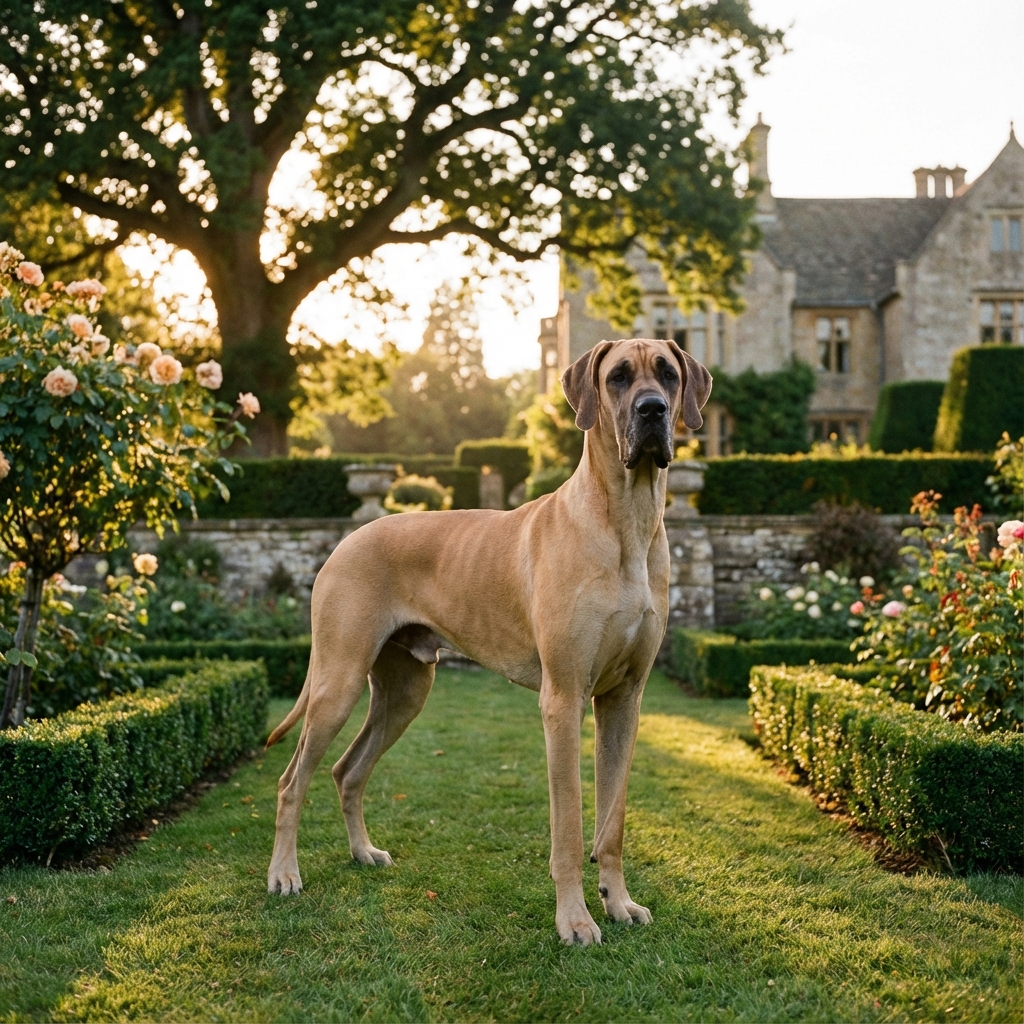
Great Dane
The Great Dane is a giant breed originating in Germany, historically used to hunt wild boar. Known a...

Irish Wolfhound
The gentle giant of Ireland, the Irish Wolfhound is the tallest of all dog breeds, known for his imm...

Leonberger
The Leonberger is a giant breed developed in the 1840s in Leonberg, Germany, by crossing Newfoundlan...