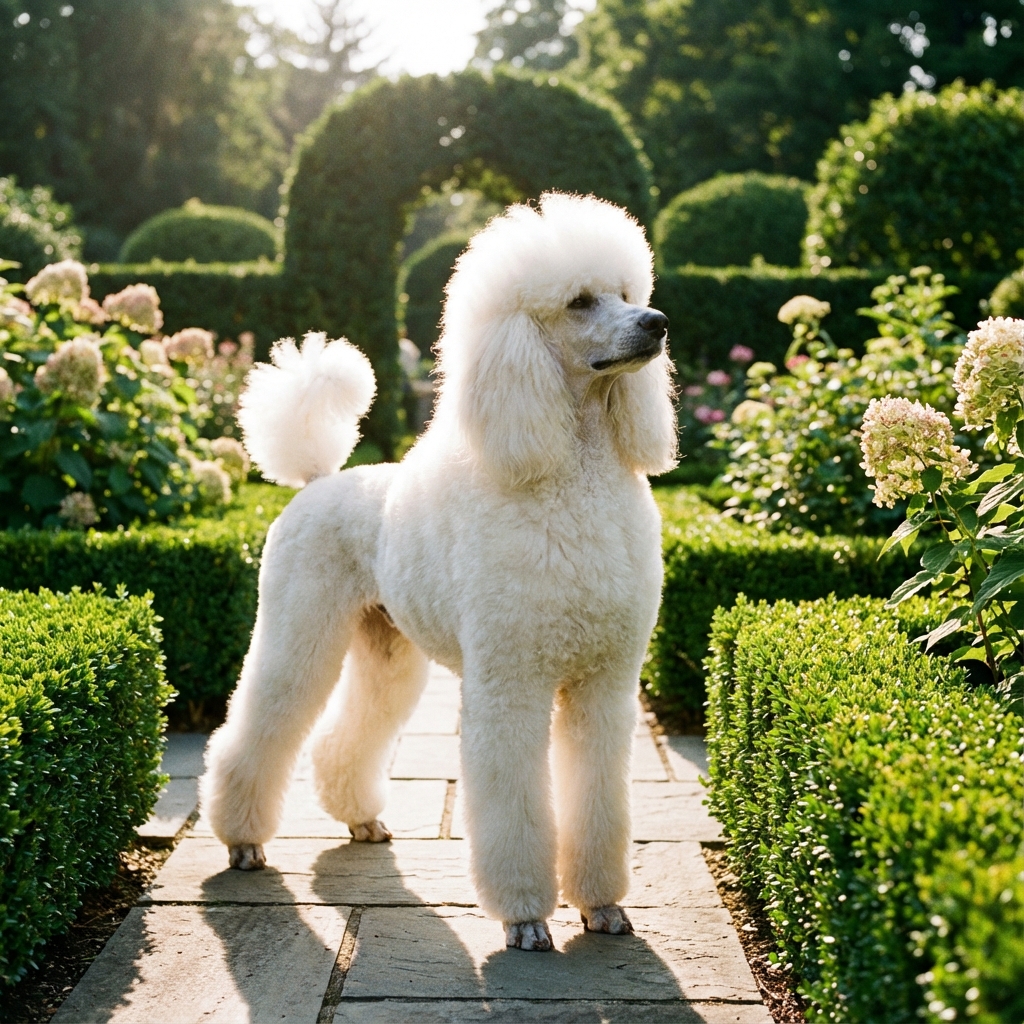
Poodle
The Poodle is a German-origin water retriever, later refined in France, known for its continuously-growing curly coat and high trainability. Recognized in three size varieties — Standard, Miniature, and Toy — the breed ranks second in intelligence assessments among dog breeds.
The Poodle is ranked second in intelligence among all breeds in standard assessments, yet has a widespread reputation as a decorative companion. In reality, Poodles were originally bred as water retrievers in Germany and have served in hunting trials, search and rescue, and as official war dogs for several Allied nations during WWII.
The elaborate haircut has practical origins: hunters would shave the hindquarters to reduce drag while swimming, leaving puffs of dense curls over the chest and joints to protect vital organs from cold water. The modern show clip elaborates on that functional trim.
Understanding the breed’s working background clarifies its behavioral needs more accurately than its show-ring appearance suggests.
Three Dogs, One Breed
The AKC recognizes three size varieties, all considered the same breed:
Standard Poodle – Over 15 inches at the shoulder, 40–70 lbs. The original size. Has the highest energy requirements and benefits most from vigorous outdoor activity. Can legitimately participate in hunting and field work.
Miniature Poodle – 10–15 inches, 10–15 lbs. The middle option. Slightly lower energy than the Standard but retains the same intelligence and drive. Often described by owners as the most balanced of the three.
Toy Poodle – Under 10 inches, 4–6 lbs. Bred as a companion, particularly popular among French nobility. Same sharp intelligence and strong personality as the others, in a much smaller container. Tends toward longer lifespans—some reaching 16–18 years.
The Coat
The defining practical reality of Poodle ownership is the coat. It grows continuously, does not shed in the traditional sense (dead hair is trapped in the curls rather than falling out—the reason for their hypoallergenic reputation), and will mat badly if not maintained. Professional grooming every 4–6 weeks is a lifetime requirement, not a preference. Budget $60–$120+ per appointment depending on size and style, for the entire life of the dog. If this is a dealbreaker, the Poodle is not the right breed.
Between appointments, the coat needs brushing every 2–3 days, paying particular attention to the areas behind the ears, in the armpits, and around the collar where mats form first.
One grooming detail that surprises new owners: Poodles grow hair inside their ear canals. This needs to be plucked or trimmed periodically to prevent wax buildup and subsequent ear infections.
Colors are always solid: black, white, apricot, red, cream, brown, café-au-lait, silver, gray, or blue.
Intelligence, and What It Costs You
Saying a Poodle is intelligent understates the case. They learn new behaviors in a single session and retain them indefinitely. They understand context, not just commands—they read your body language, your emotional state, and your daily routine. Standard Poodles have been documented opening latches, solving multi-step puzzle feeders at the highest difficulty settings, and anticipating their owner’s schedule with unnerving accuracy.
This intelligence is deeply enjoyable when channeled correctly. It becomes a liability when the dog is bored. An unstimulated Poodle—of any size—invents its own activities, and those activities are rarely human-approved. They need training, interactive play, variety in their walks, access to puzzle feeders, and genuine mental engagement built into their daily life.
They also feel things. Poodles are emotionally sensitive in a way that surprises many first-time owners. A tense household affects them. Raised voices affect them. Harsh training methods shut them down quickly and reliably. They respond to positive, reward-based training with extraordinary enthusiasm—and they respond to frustration or harshness by disengaging.
Exercise By Size
Standard Poodles need 45–90 minutes of vigorous daily exercise—running, swimming, agility, fetch sessions, or combinations of these. They love water with a genetic intensity. Access to a pool or lake is genuinely enriching.
Miniature and Toy Poodles need proportionally less but should not be treated as couch ornaments. A 30-minute walk plus indoor play keeps a Miniature satisfied. A Toy Poodle who never exercises develops the anxious, vocal behaviors that give the variety its unfortunate reputation.
All three sizes excel in agility, obedience, rally, nosework, and—for Standards—hunting tests and dock diving.
Health Across the Sizes
Poodles as a group are long-lived. Toys and Miniatures frequently reach 14–18 years. Standards average 12–15.
Key health considerations vary by size:
- Standard Poodles: Bloat (GDV) is the most serious concern—they have deep chests and a genetic tendency. Two smaller meals daily, slow-feeder bowls, and no vigorous exercise within an hour of eating are standard precautions. Some owners opt for prophylactic gastropexy. Addison’s Disease (adrenal insufficiency) is also notably more common in Standards than in most other breeds.
- All sizes: Progressive Retinal Atrophy (DNA-testable), cataracts, sebaceous adenitis (a skin condition common in Standards), and hypothyroidism.
- Toy and Miniature: Patellar luxation (slipping kneecap) and dental disease are common size-related concerns.
Who This Dog Is For
The Poodle works for a wide range of households—more so than most dogs at this intelligence level—because the size variation allows for genuine adaptation. A Standard suits an active outdoor person. A Miniature suits a city dweller with moderate activity. A Toy suits someone in a small space who still wants a bright, responsive companion.
What all three sizes require equally: time, mental engagement, consistent training, and the grooming budget. None of them do well with long stretches of solitude. None of them are content to be decorative.
The Poodle is one of the most capable and adaptable breeds across size varieties. It is also a breed that requires a professional grooming appointment every six weeks for its entire life.
Related Breeds

American Pit Bull Terrier
The American Pit Bull Terrier is a medium-sized, athletic working dog developed in the United States...

American Water Spaniel
The American Water Spaniel is a rare, dual-purpose hunting breed developed in the river valleys of W...

American Staffordshire Terrier
The American Staffordshire Terrier is a muscular, medium-sized breed developed from Bull-and-Terrier...