
Saint Bernard
The Saint Bernard is a giant Swiss working breed developed at the Great St. Bernard Pass hospice for alpine search-and-rescue work. The breed is credited with saving over 2,000 lives and is known for its calm, patient temperament.
The Saint Bernard is a giant Swiss breed credited with saving over 2,000 lives in the alpine passes of the Great St. Bernard Pass. Known for its massive head, deep chest, and red-and-white coloring, the breed has a long history of search-and-rescue work conducted by monks of the Great St. Bernard Hospice.
Today, Saint Bernards are primarily family companions. They are calm, patient, and tolerant of children, though their size and drooling tendencies make them high-maintenance in different ways than smaller breeds.
History and Origin: The Hospice Dogs
The breed’s history is tied to the Great St. Bernard Pass, a dangerous 49-mile route between Switzerland and Italy. In the 11th century, a monk named Bernard of Menthon founded a hospice there to aid travelers and pilgrims.
By the late 1600s, the monks began keeping large mountain dogs (descended from Roman Molossian dogs) to guard the grounds and accompany them on search-and-rescue missions. The dogs proved to have an uncanny ability to find lost travelers buried in snow and to sense impending avalanches.
The most famous Saint Bernard was Barry (1800-1814), who reportedly saved 40 lives. To this day, the hospice always keeps one dog named Barry in his honor.
Myth Buster: Did they really carry barrels of brandy? No. That image comes from an 1820 painting by Edwin Landseer. The monks insist that brandy would have been a terrible idea for hypothermia (it dilates blood vessels, cooling the body down), but the image stuck.
Physical Characteristics
The Saint Bernard is a colossal dog. Everything about them is huge.
- Height: Males 28-30 inches; females 26-28 inches.
- Weight: 120 to 180 pounds (some can reach 200+).
Coat Types
There are two coat varieties:
- Shorthair (Smooth): The original coat type. Dense, tough, and lies flat.
- Longhair (Rough): Medium-length, slightly wavy hair. Interestingly, the monks tried breeding longhaired dogs to withstand the cold better, but ice balls formed in the fur, weighing the dogs down. As a result, longhaired Saints were given away to valley farmers, becoming the ancestors of today’s pet Saints.
Colors
They are always red and white (ranging from orange/mahogany to brindle) with specific white markings on the chest, feet, tail tip, and a blaze on the face. The “black mask” around the eyes gives them their signature thoughtful expression.
Temperament: A Saintly Disposition
The Saint Bernard is famous for its calm, patient, and gentle nature. They are rarely aggressive.
Behavior with Children
The Saint Bernard is exceptionally tolerant of children. They withstand considerable handling (though supervision is always required). Their size alone can reassure young children, though it also poses a risk of accidental knockdowns.
Quiet Watchdogs
They are not barkers. A Saint Bernard will usually only bark if there is a genuine reason. However, their size alone is a deterrent to intruders. A deep, booming “woof” from a 160-pound dog is usually enough to send anyone running.
Stubbornness
They are intelligent but can be stubborn. A Saint Bernard often moves at its own pace (which is “slow”). If they don’t want to do something, they will simply lay down and become a 150-pound rug that you cannot move.
Energy Level and Exercise
Saint Bernards are low-energy dogs. They are not built for marathons.
- Daily Exercise: A 30-45 minute walk is sufficient.
- Cold Weather: They are well-suited to cold weather and enjoy activity in winter conditions.
- Hot Weather: They are extremely prone to heatstroke. In summer, they should be kept indoors with air conditioning during the day.
Training Essentials: Managing the Giant
Training is not optional with a giant breed.
- Leash Manners: You cannot physically overpower a 180-pound dog who decides to chase a squirrel. You must teach loose-leash walking from puppyhood.
- No Jumping: A cute puppy jumping up is fine; a 150-pound adult jumping up knocks grandma over. Teach “four on the floor” early.
- Socialization: Because they are so large, a fearful or reactive Saint Bernard is a liability. Expose them to everything while they are young and manageable.
Feeding Guide: Preventing Bloat
Feeding a Saint Bernard is an art form.
- Volume: They eat a lot, but less than you might think for their size due to their low metabolism. 4-8 cups of high-quality dry food a day is standard.
- Bloat Prevention: As a deep-chested breed, they are at high risk for Gastric Dilatation-Volvulus (Bloat).
- Feed 2-3 smaller meals a day instead of one large one.
- Use a “slow feeder” bowl to prevent gulping.
- Wait 60 minutes after eating before any exercise.
Health and Lifespan
The tragedy of the giant breeds is their short lifespan. Saint Bernards typically live 8 to 10 years.
- Bloat (GDV): The #1 killer. Their deep chest makes them high-risk. Preventive gastropexy surgery is often recommended.
- Hip and Elbow Dysplasia: Very common. Responsible breeders must test parents (OFA).
- Heart Conditions: Dilated Cardiomyopathy (DCM).
- Bone Cancer (Osteosarcoma): Higher rates in giant breeds.
- Eye Issues: Entropion (eyelids rolling in) and Ectropion (eyelids drooping down).
Famous Saint Bernards
- Beethoven: The sloppy, lovable star of the 1992 movie and its many sequels. He cemented the breed’s reputation as a family disaster-master.
- Cujo: Stephen King’s novel (and film adaptation) about a rabid Saint Bernard. Real Saints rarely display this level of aggression.
- Buck: The hero of Jack London’s Call of the Wild was a Saint Bernard mix (crossed with a Scotch Shepherd).
Grooming: The Drool Factor
Let’s be honest: Saint Bernards are gross.
- Drool: They possess loose jowls and produce copious amounts of saliva. It will be on your walls, your clothes, and your guests. If you cannot handle drool, do not get this breed.
- Shedding: They shed heavily twice a year.
- Brushing: Weekly brushing is needed (daily during shedding season).
- Eye Care: Their droopy eyes tend to collect goo and need daily wiping.
Is a Saint Bernard Right for You?
Yes, if:
- You want a massive, loving cuddle-buddy.
- You have children and want a patient family dog.
- You live in a cool climate.
- You don’t mind mess (hair, mud, and LOTS of drool).
No, if:
- You live in a tiny apartment (they take up huge physical space).
- You are a “neat freak.”
- You want a running partner.
- You cannot afford the high cost of food and veterinary care for a giant breed.
The Saint Bernard requires significant space, a cool climate, and owners prepared for substantial drool, shedding, and the elevated health costs associated with giant breeds. For families who can accommodate these requirements, the breed offers a calm, tolerant, and devoted companion.
Related Breeds
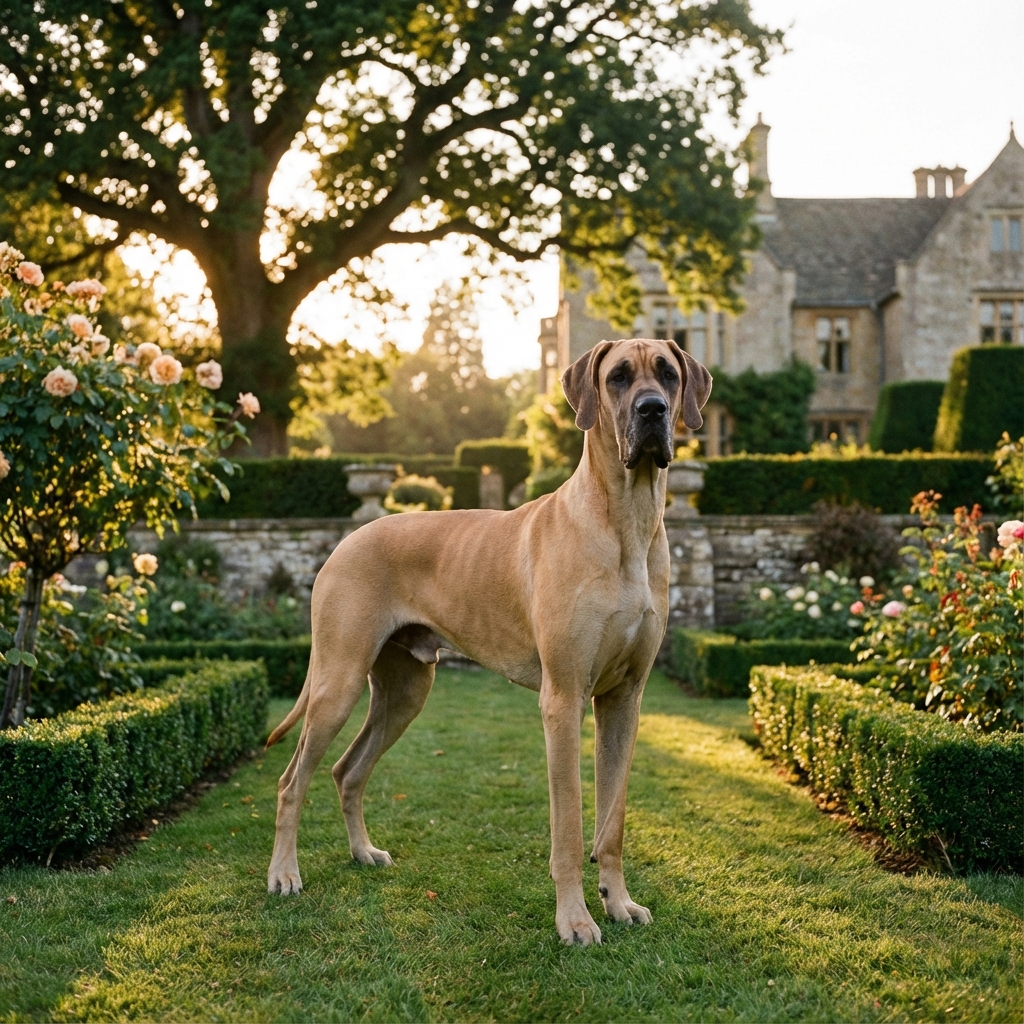
Great Dane
The Great Dane is a giant breed originating in Germany, historically used to hunt wild boar. Known a...

Irish Wolfhound
The gentle giant of Ireland, the Irish Wolfhound is the tallest of all dog breeds, known for his imm...

Leonberger
The Leonberger is a giant breed developed in the 1840s in Leonberg, Germany, by crossing Newfoundlan...