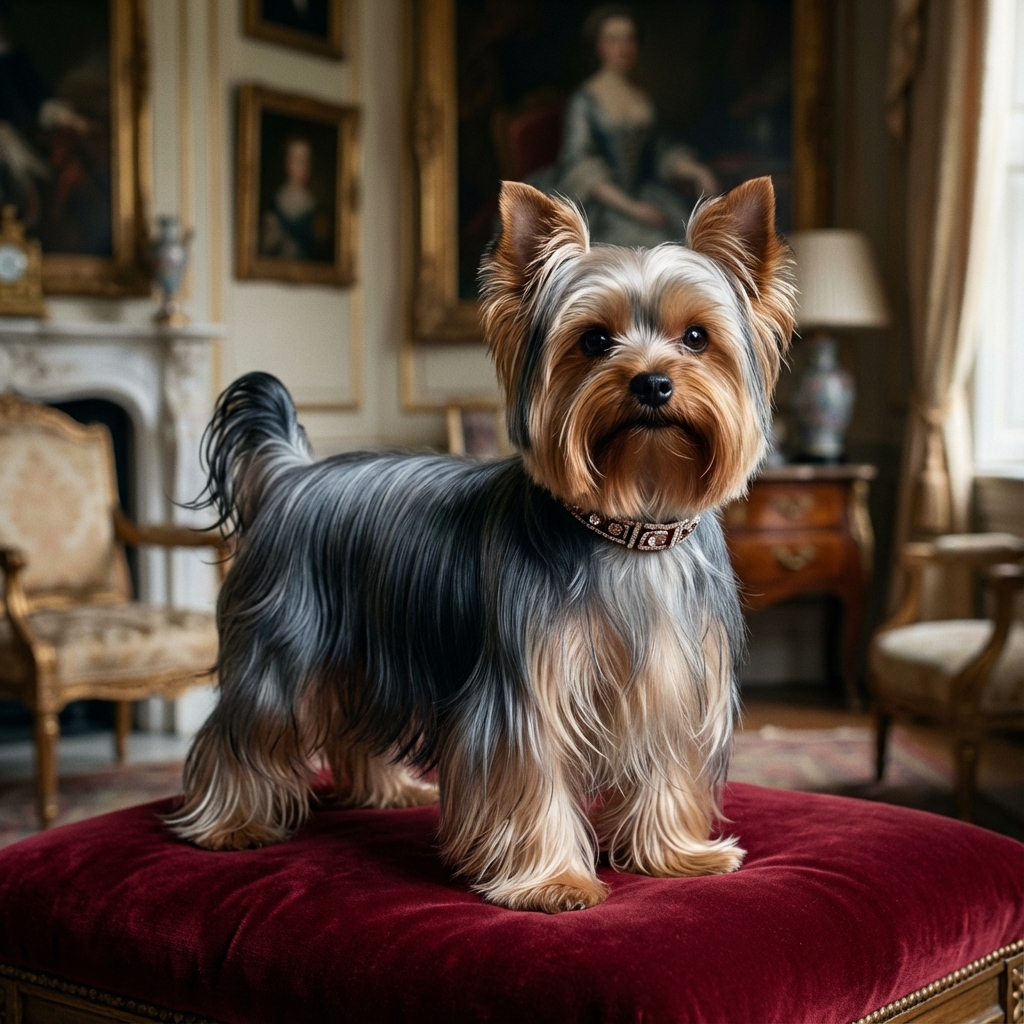
Yorkshire Terrier
The Yorkshire Terrier is a small English toy breed originating in Yorkshire and Lancashire during the Industrial Revolution, initially bred by mill and mine workers to hunt rats. The breed transitioned from working dog to fashionable companion in the Victorian era, known for its silky blue-and-tan coat that does not shed.
The Yorkshire Terrier, known as the “Yorkie,” is the most popular toy dog breed in the United States. With its long, silky blue-and-tan coat and compact size, the breed is a frequent sight in urban settings. Despite its elegant appearance, the Yorkie is descended from working terriers bred to hunt rats in Yorkshire mills and mines.
The Yorkie is feisty, brave, and assertive — typical terrier traits that persist despite the breed’s transition to companion status. They are small enough for cabin travel but spirited enough to patrol a home’s perimeter with considerable determination.
History and Origin: From Rags to Riches
The Yorkie has a surprisingly humble origin story. He was born during the Industrial Revolution in the counties of Yorkshire and Lancashire in northern England.
- The Working Roots: In the mid-19th century, Scottish workers came south to work in the coal mines and textile mills, bringing with them a variety of small terriers (like the Clydesdale and Paisley Terriers). These dogs were bred to squeeze into the small, dark spaces in the mills and mines to hunt rats. They were tough, fearless working dogs who earned their keep by killing vermin.
- The Transformation: Over time, breeders began to select for smaller size and finer coats. The rough-and-tumble ratter caught the eye of Victorian ladies, who began carrying them as lapdogs. By the late Victorian era, the Yorkshire Terrier had moved from the coal mines to the drawing rooms of the rich. But the hunter’s instinct remains alive and well today.
Physical Characteristics: A Silky Toy
The Yorkie is a Toy breed, delicate but compact. He carries his head high with an air of self-importance.
- Height: 7–8 inches (17-20 cm).
- Weight: The breed standard caps the weight at 7 pounds (3.2 kg). Many pet Yorkies are larger (10-12 lbs), which actually makes them sturdier pets.
The Crowning Glory: The Coat
The single most distinctive feature of the Yorkie is his coat.
- Texture: It is hair, not fur. It is silky, fine, and glossy, similar to human hair. It does not have an undercoat and does not shed much, making the Yorkie essentially hypoallergenic.
- Color: Puppies are born black and tan. As they mature, the color changes to a distinctive steel blue (on the body) and rich golden tan (on the head and legs). The transition can take up to three years.
- Maintenance: A show coat reaches the floor and requires hours of daily grooming. Most pet owners opt for a “puppy cut” (short all over), which gives the dog a cute, eternal puppy look.
”Teacup” Yorkies
Buyer Beware: Unethical breeders often market “Teacup” Yorkies (under 4 lbs). These dogs are often runts bred with runts and are plagued with serious health issues (fragile bones, organ failure) and tragically short lifespans. A healthy, standard-sized Yorkie is a much better choice.
Temperament and Personality
The Yorkie is a big personality in a tiny body.
The Napoleon Complex
Yorkies have no concept of their size. They will fearlessly bark at (or chase) a Great Dane. They will stand their ground against a delivery truck. You must protect them from themselves, as they can easily get hurt picking fights they can’t win. They are brave to the point of recklessness.
Affectionate with Their People
Yorkies are closely attached to their owners and prefer constant proximity. They make suitable companions for those living in apartments or for elderly owners who are home frequently. They can be suspicious of strangers and will often bark to announce visitors.
The Watchdog
They are alert watchdogs. If a leaf blows across the driveway, you will know about it. Without early training, this barking can become excessive (“yappy”). They take their duty to protect the castle very seriously.
Training and Exercise Needs
Exercise: Surprisingly Active
Yorkies are active little dogs. They don’t need a 5-mile run, but they are not lazy.
- Daily Needs: Two 15-minute walks a day and some indoor play (fetch in the hallway) are sufficient.
- Mental Stimulation: They are smart and need brain games to prevent boredom.
- Cold Weather: They have no undercoat and get cold easily. They need a sweater in winter.
Training: The Iron Will
They are smart but independent (stubborn).
- Potty Training: This is the hardest part of owning a Yorkie. They are notorious for being difficult to housebreak. Because they are small and low to the ground, they dislike cold or wet grass. Many owners use indoor pee pads or litter boxes as a permanent solution. Consistency and patience are mandatory.
- Socialization: Essential to prevent them from becoming snappy with strangers or other dogs. Carry them everywhere as puppies.
Health and Lifespan
Yorkies are generally long-lived, often reaching 13 to 15 years or more.
- Luxating Patella: Slipping kneecaps. This can cause the dog to hop or limp.
- Tracheal Collapse: A genetic weakening of the windpipe. You should always use a harness, never a collar, to walk a Yorkie. Pulling on a collar can crush their delicate throat and cause a honking cough.
- Dental Issues: Their small mouths crowd their teeth, leading to rapid decay and gum disease. Daily brushing and professional cleanings are mandatory to save their teeth.
- Hypoglycemia: Low blood sugar, especially in puppies. They need to eat small meals frequently to prevent seizures.
- Portosystemic Shunt (Liver Shunt): A congenital defect where blood bypasses the liver.
Grooming and Care
- The Eyes: The hair on the head grows long and can irritate the eyes. It must be tied up in a topknot or trimmed short.
- The Rear End: The hair around the anus needs to be kept short for hygiene.
- Nails: They grow fast and need frequent trimming.
Is a Yorkshire Terrier Right for You?
The Yorkie is a delightful, spirited companion.
Yes, if:
- You live in a small apartment. He is the perfect condo dog.
- You want a dog that travels easily. He flies in the cabin.
- You want a devoted companion who is hypoallergenic. No shedding.
- You don’t have small children. Toddlers can accidentally injure fragile Yorkies.
No, if:
- You have no patience for housebreaking. Accidents will happen.
- You want a quiet house. He barks.
- You don’t want to deal with grooming. He needs haircuts.
- You want a “rough and tumble” dog. He is physically delicate.
The Yorkshire Terrier is an active, loyal, and spirited companion suited to apartment living. Prospective owners should be prepared for the challenges of housebreaking, consistent dental care, and the decision between maintaining a show coat or keeping the dog in a shorter trim.
Related Breeds

Alaskan Klee Kai
The Alaskan Klee Kai is a small, energetic spitz breed developed in Alaska in the 1970s, resembling ...

American Eskimo Dog
The American Eskimo Dog is a Nordic spitz breed descended from German Spitz dogs, known for its whit...

American Hairless Terrier
Smart, spirited, and hypoallergenic, the American Hairless Terrier is a lively companion that thrive...