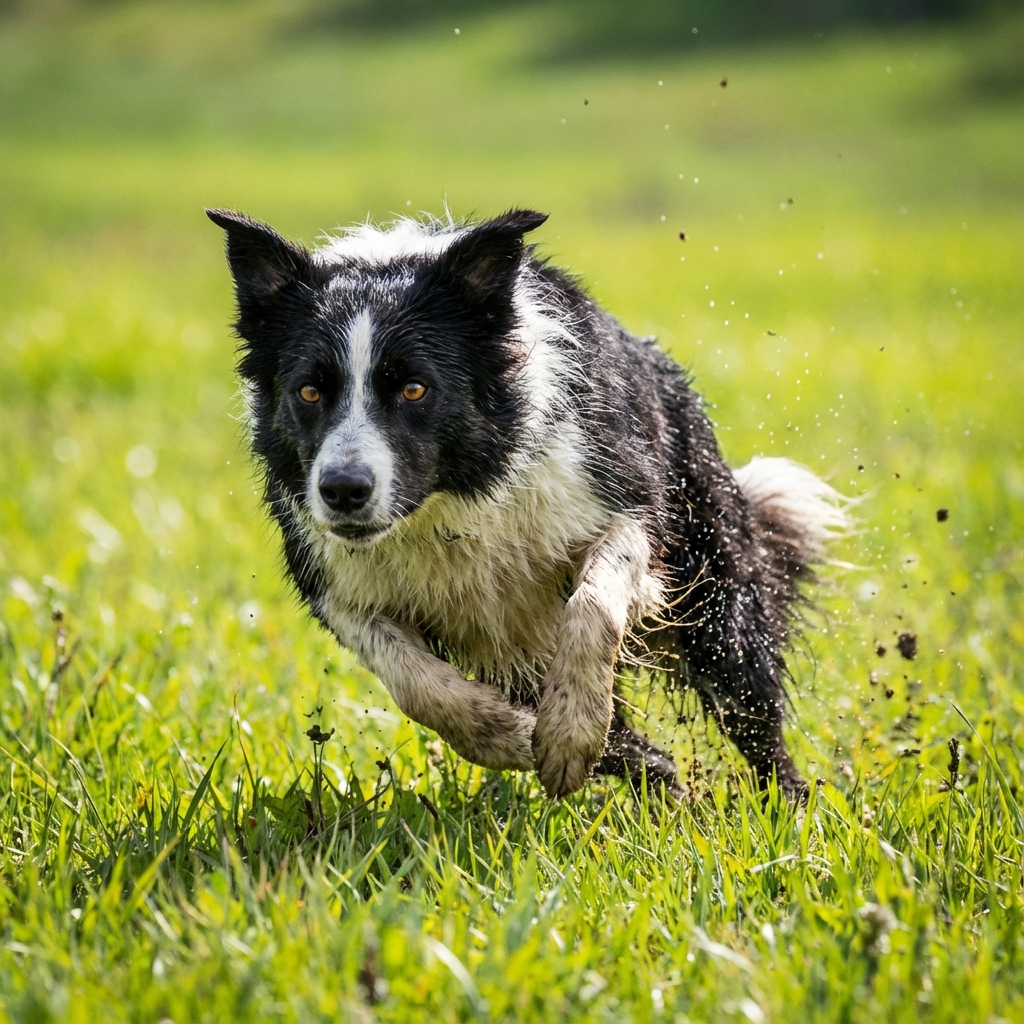
Border Collie
The Border Collie is a medium-sized herding dog from the Scottish-English border region, widely ranked as the most trainable dog breed and used extensively in sheepdog trials and dog sports.
The Border Collie is widely regarded as the most intelligent dog breed in the world. Known for their intense “herding eye” and high energy, these dogs were originally developed in the rugged border country between Scotland and England. Today, they work as sheepherders, compete in dog sports, and serve as companions for active households.
The Border Collie is not a dog for every owner. Their high intelligence and drive require significant mental and physical stimulation, and a bored Border Collie typically becomes destructive.
History and Origin
The history of the Border Collie dates back to the Roman occupation of Britain. When the Romans arrived, they brought their own herding dogs, which were large, heavy-boned breeds. As the Roman Empire faded and the Vikings invaded, they introduced smaller, quicker spitz-type herders. The crossbreeding of these two types produced the ancestors of the modern Border Collie: agile, intelligent, and perfectly suited to the rocky, harsh terrain of the Scottish-English borderlands.
The breed as we know it today owes much of its lineage to a single dog named Old Hemp, born in 1893. Old Hemp was a quiet, powerful worker who herded sheep with intense focus rather than barking and nipping. His style was so effective that he became the father of the modern breed; nearly all purebred Border Collies alive today can trace their ancestry back to him.
The name “Border Collie” became official in 1915, coined by James Reid, secretary of the International Sheep Dog Society (ISDS), to distinguish them from other collie breeds like the Rough Collie or the Scotch Collie.
Physical Characteristics
Border Collies are medium-sized dogs with an athletic, muscular build optimized for agility. They are built for endurance, capable of running for miles day after day.
- Height: Males typically stand 19 to 22 inches (48-56 cm) at the shoulder, while females are slightly smaller, ranging from 18 to 21 inches (46-53 cm).
- Weight: They generally weigh between 30 to 55 pounds (14-25 kg).
Coat and Colors
The breed comes in two coat varieties:
- Rough Coat: Medium-length hair with feathering on the legs, chest, and belly.
- Smooth Coat: Shorter, coarser hair with minimal feathering.
Both coat types have a dense, weather-resistant double coat designed to protect them from the unpredictable British weather. While the classic black-and-white coloring is the most recognizable, Border Collies come in a vast array of colors and patterns, including:
- Red and White
- Blue Merle
- Red Merle
- Tri-color (Black, White, and Tan)
- Sable
- Lilac
It is often said by shepherds that “no good dog is a bad color,” emphasizing that working ability has always been prioritized over appearance.
Temperament and Personality
The Border Collie’s personality is defined by two words: Intelligence and Energy.
High Trainability
Ranked #1 in Stanley Coren’s “The Intelligence of Dogs,” Border Collies can learn a new command in under five repetitions and obey it 95% of the time. They are problem-solvers who will open doors, unlatch gates, and access food that was thought to be secured. This intelligence makes them highly trainable but also demanding to live with, as they require consistent mental engagement.
The Workaholic
This is not a “couch potato” breed. Border Collies have an intrinsic desire to work. If you don’t give them a job—whether it’s herding sheep, catching a frisbee, or practicing agility—they will invent their own work. Unfortunately, their chosen “jobs” might include herding your children, chasing cars, or re-landscaping your garden.
Affectionate but Focused
While they are affectionate with their families, they are often less “cuddly” than breeds like Golden Retrievers. They bond deeply with their handlers and are often “one-person dogs.” They can be reserved with strangers, making them decent watchdogs, though they are rarely aggressive without cause.
Training and Exercise Needs
This is the most critical section for any potential owner. A bored Border Collie is a destructive Border Collie.
Exercise Requirements
A simple walk around the block is not enough. These dogs need at least 90 minutes to 2 hours of vigorous activity every day. This should include:
- High-intensity running (off-leash in a safe area).
- Games of fetch with a ball or frisbee.
- Hiking or running with their owner.
Mental Stimulation
Physical exercise alone won’t tire them out; you must exhaust their brains.
- Puzzle Toys: Kongs, treat dispensers, and complex puzzles are essential.
- Trick Training: Teach them names for their toys, complex sequences, or household chores.
- Dog Sports: Border Collies excel in Agility, Flyball, Obedience, and Herding trials. Participating in these sports is one of the best ways to keep them happy.
Socialization
Because of their herding instinct, they can be reactive to movement. Early socialization is vital to prevent them from nipping at the heels of running children, joggers, or cyclists. They need to learn that not everything that moves needs to be controlled.
Health and Lifespan
Border Collies are generally a hardy and healthy breed, with a lifespan of 12 to 15 years. However, like all purebred dogs, they are prone to certain genetic conditions.
- Hip Dysplasia: A malformation of the hip joint that can lead to arthritis.
- Collie Eye Anomaly (CEA): An inherited disease that affects the development of the eye and can lead to blindness.
- Epilepsy: A neurological disorder causing seizures.
- MDR1 Gene Mutation: Sensitivity to certain drugs (like Ivermectin). It is crucial to test for this gene before administering medication.
- Trapped Neutrophil Syndrome (TNS): An immune system deficiency where white blood cells are trapped in the bone marrow.
Responsible breeders will screen for these conditions using DNA tests and OFA (Orthopedic Foundation for Animals) evaluations. Always ask to see the health clearances of the puppy’s parents.
Grooming and Care
Despite their lush coats, Border Collies are relatively low-maintenance when it comes to grooming.
- Brushing: They shed year-round, with heavier shedding (“blowing coat”) in the spring and fall. Brushing them 2-3 times a week is usually sufficient to remove loose hair and prevent mats, especially behind the ears and on the “trousers” (hind legs).
- Bathing: They only need a bath every few months, or when they get muddy. Their coat naturally repels dirt.
- Nail Trimming: Active dogs often wear their nails down naturally, but you should check them monthly.
- Ears and Teeth: Check ears weekly for infection and brush their teeth regularly to prevent dental disease.
Nutrition
Border Collies are high-energy dogs that require a high-quality diet rich in protein and healthy fats to fuel their active lifestyles.
- Puppies: Need a formula specifically for growth to support bone development.
- Adults: Active working dogs may require “performance” blends with higher calorie counts. However, if your Border Collie is a house pet with moderate exercise, be careful not to overfeed them. Obesity is a major health risk that puts strain on their joints.
Consult with your veterinarian to determine the right portion size based on your dog’s age, weight, and activity level.
Is a Border Collie Right for You?
The Border Collie is an unparalleled companion for the right person, but a challenge for the wrong one.
This breed is a great match if:
- You are an active person who loves the outdoors, running, or hiking.
- You are interested in dog sports or advanced obedience training.
- You have the time to dedicate 1-2 hours daily to your dog.
- You want a dog that is highly responsive and eager to learn.
You might want to reconsider if:
- You live in a small apartment without immediate access to large open spaces (though it can work with extreme dedication).
- You work long hours and would leave the dog alone for most of the day.
- You prefer a low-maintenance, “chill” pet.
- You have very small children (the herding instinct can be an issue).
The Border Collie is a highly capable working breed. For owners who can meet their exercise and mental stimulation requirements, they are loyal, responsive, and deeply engaged companions.
Related Breeds

American Pit Bull Terrier
The American Pit Bull Terrier is a medium-sized, athletic working dog developed in the United States...

American Water Spaniel
The American Water Spaniel is a rare, dual-purpose hunting breed developed in the river valleys of W...

American Staffordshire Terrier
The American Staffordshire Terrier is a muscular, medium-sized breed developed from Bull-and-Terrier...