
Tibetan Mastiff
The Tibetan Mastiff is an ancient guardian breed from the Himalayas, used for centuries to protect monasteries and nomadic camps from wolves and leopards. Among the most genetically primitive dog breeds, it is characterized by a heavy lion-like mane, nocturnal alertness, and a strongly independent temperament.
The Tibetan Mastiff is one of the most genetically primitive dog breeds, having spent thousands of years guarding monasteries and nomadic camps in the Himalayas against leopards, wolves, and bears.
They are known for their massive lion-like mane and a strong nocturnal barking instinct. In China, they briefly became status symbols — one puppy reportedly sold for nearly $2 million in 2014 — before the market collapsed and many were abandoned.
The Tibetan Mastiff is a primitive working dog, not an eager-to-please companion breed. They are independent thinkers accustomed to making decisions without human direction and require experienced ownership.
History and Origin: The Guardian of the Roof of the World
The breed is so old that its true origins are lost to time. DNA studies suggest they diverged from the grey wolf much earlier than most other dog breeds (around 58,000 years ago). They are the ancestors of all modern mastiff breeds.
For centuries, they were tethered outside tents and monasteries in Tibet during the day and let loose at night to patrol the perimeter. This history explains their nocturnal nature: they are hard-wired to sleep all day and bark all night at any perceived threat.
Marco Polo encountered them in the 13th century and described them as “tall as a donkey with a voice as powerful as that of a lion.”
The $2 Million Dog Bubble
In the early 2010s, the Tibetan Mastiff became the ultimate status symbol for China’s nouveau riche. Prices skyrocketed. A golden-haired puppy named “Big Splash” reportedly sold for $1.5 million, and another for nearly $2 million. Tragically, when the economic bubble burst and the fad faded, thousands of these dogs were abandoned. It is a stark reminder that dogs should be chosen for their suitability as companions, not their price tag.
Physical Characteristics
They are immense, heavy-boned dogs.
- Height: Males at least 26 inches (often 30+); females at least 24 inches.
- Weight: 90 to 150+ pounds.
The Mane
Their double coat is thick, heavy, and weather-resistant. Males, in particular, develop a profuse “ruff” or mane around the neck and shoulders, enhancing the lion-like appearance.
- Color: Black, Brown, Blue/Grey, and Gold. Often with tan markings (black and tan). The tan spots above the eyes are said to be “extra eyes” that allow the dog to see evil spirits even when sleeping.
Temperament: The Independent Guardian
Tibetan Mastiffs are aloof, territorial, and independent.
Not for Beginners
This is a primitive breed. They do not look to humans for direction. They make their own decisions. If you tell them to “Come” and they don’t see a reason to, they won’t.
The Night Watchman
They are calm and quiet indoors during the day. But when the sun goes down, their instincts kick in. If kept outside, they will bark at the wind, a falling leaf, or a ghost two miles away. This can be a nightmare for neighbors.
Suspicious of Strangers
They are naturally wary. They will accept guests if introduced properly by you, but they will never be “friendly” with strangers. They are constantly assessing threats.
Energy Level and Exercise
Surprisingly, they are low-energy adults.
- Daily Exercise: A steady walk is enough. They are not frisbee dogs.
- Leash Safety: Never walk them off-leash. Their recall is non-existent, and they can be aggressive toward other dogs or threats.
- Fencing: You need a fortress. They can climb fences or dig under them if they decide to patrol a wider territory.
Diet: The Efficient Eater
Despite their size, they eat surprisingly little. Having evolved in the resource-scarce Himalayas, their metabolism is incredibly efficient. Overfeeding them is easy and dangerous (joint stress). They often go on self-imposed “hunger strikes” where they skip meals for days; this is normal for the breed but alarming to new owners.
Grooming: The Yearly Blowout
They are relatively clean dogs with little odor.
- Brushing: A weekly brush is fine for most of the year.
- Blowing Coat: Once a year (usually spring), they shed their entire undercoat. It comes out in massive clumps. You will be able to fill trash bags with fur. During this 4-6 week period, daily brushing is mandatory.
Health and Lifespan
For a giant breed, they are surprisingly long-lived, often reaching 10 to 12+ years.
- Late Maturity: Females only have one heat cycle a year (primitive trait). They don’t reach physical maturity until 3-4 years old.
- Hip/Elbow Dysplasia: Common.
- Thyroid Issues: Hypothyroidism is relatively common.
- CIDN: Canine Inherited Demyelinating Neuropathy (a genetic nerve disease).
Frequently Asked Questions (FAQ)
Are Tibetan Mastiffs good family dogs? With their own immediate family, Tibetan Mastiffs are incredibly devoted, gentle, and fiercely protective. However, their definition of “family” is very strict. They do not welcome strangers easily. This makes them difficult dogs for families who frequently have guests, children’s friends, or delivery drivers coming to the house, as the dog will naturally view all outsiders as potential threats to their flock.
How much does a Tibetan Mastiff eat? Surprisingly little for a dog of their immense size. Because they evolved in the harsh, resource-starved environment of the Himalayas, their metabolisms are remarkably efficient. They require high-quality food, but in much smaller quantities than one would expect for a 150-pound dog. In fact, overfeeding a Tibetan Mastiff is very dangerous and can lead to severe joint problems.
Do they really bark that much? Yes. For thousands of years, their specific job was to sleep during the day and patrol the nomadic camps at night, barking loudly to ward off snow leopards and wolves. This nocturnal barking instinct is hardwired into their DNA. If left outside at night in a suburban or urban environment, they will bark at every sound, shadow, and passing car, which will quickly make you deeply unpopular with your neighbors.
Is a Tibetan Mastiff Right for You?
Yes, if:
- You are an expert dog owner who understands primitive breeds.
- You have a large, securely fenced property (no close neighbors).
- You want a serious guardian who will protect your home with its life.
- You appreciate a dog that is more like a partner than a pet.
No, if:
- You want an obedient dog that does tricks.
- You live in a subdivision or apartment (the barking will get you evicted).
- You have many visitors coming and going.
- You are not physically strong enough to hold back a 150-pound animal.
The Tibetan Mastiff is not suited for typical pet ownership. They are working guardians whose instincts — including nocturnal barking, territorial behavior, and independence from human direction — reflect thousands of years of selective breeding for a specific function. Living with one requires significant experience, space, and commitment to their particular needs.
Related Breeds
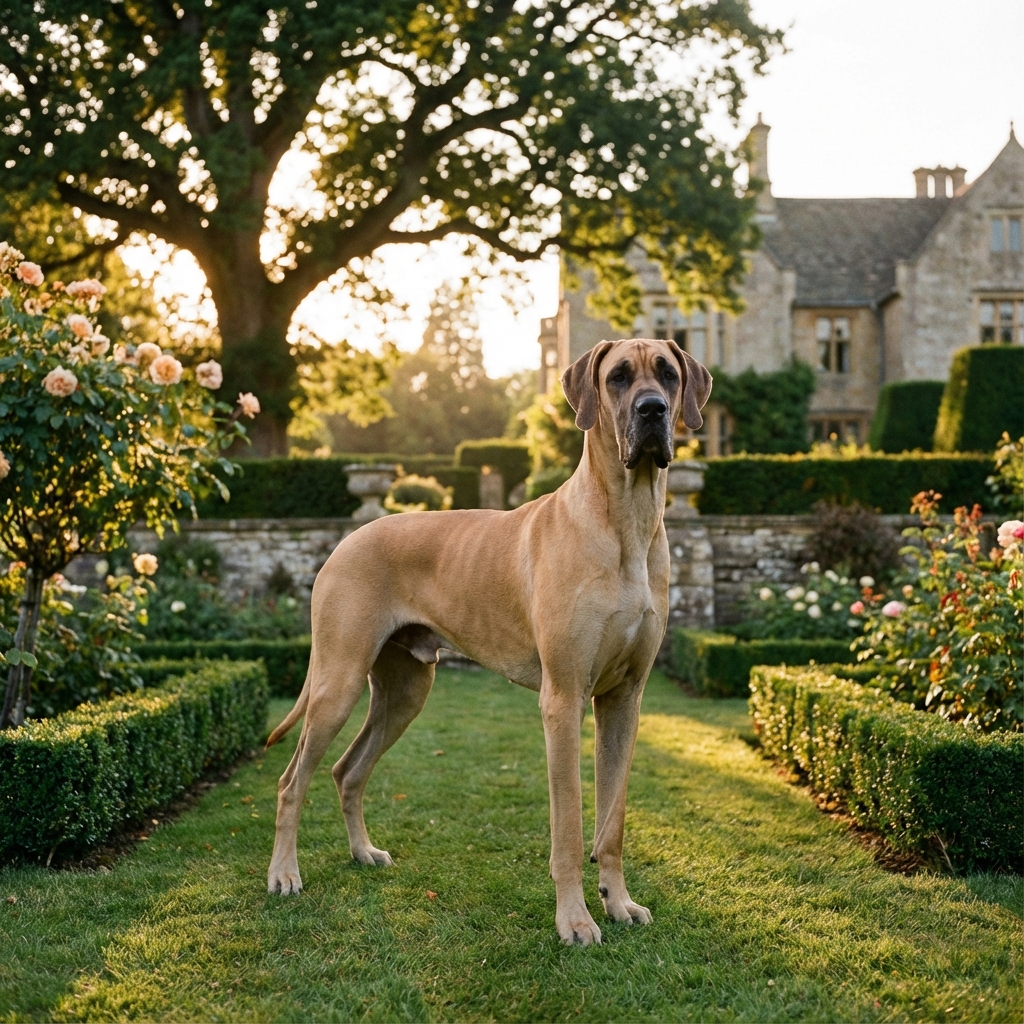
Great Dane
The Great Dane is a giant breed originating in Germany, historically used to hunt wild boar. Known a...

Irish Wolfhound
The gentle giant of Ireland, the Irish Wolfhound is the tallest of all dog breeds, known for his imm...

Leonberger
The Leonberger is a giant breed developed in the 1840s in Leonberg, Germany, by crossing Newfoundlan...